Arbutus Technical Consulting
Training Courses
Arbutus Technical Consulting prepared training in the following areas:
Systems engineering training
We have prepared two introductory courses to explain systems engineering to rail professionals who have no immediate plans to become systems engineers but need to play their part in making systems engineering happen. Firstly we prepared a half-day awareness course for London Underground, which is designed to be delivered to project managers and project engineers. Subsequently, we extended that to develop a 1-day course to provide engineering graduates in the mainline railway with a basic understanding of railway systems engineering.
Systems safety engineering training
"I would like to thank you for an exceptional quality of the work, punctuality and your cooperation during the development and delivery of the courses.
"I am particularly impressed with your ability to explain a very complex subject in a simple way and plain English so that everyone can understand the principles and most importantly apply the knowledge in their area of work and responsibility.
"The feedback we have from students is excellent. Furthermore, as a consequence of attending the courses and gaining understanding of the ESM, the safety team is being approached by a number of projects seeking help and support."
Dr Ivan Lucic,
Professional Head of Systems Safety,
London Underground
We developed a portfolio of training for London Underground in Engineering Safety Management (ESM), which is the term that London Underground prefers to use for systems safety engineering.
The first, half-day, awareness course is the counterpart of the systems engineering awareness course described above, and is designed to explain clearly what ESM is, why it must be done and what different people's parts in the process are.
Those who require a deeper understanding attend three more half-day sessions, interspersed with moderated practical assignments, which explain the tools, techniques and processes employed in the ESM process. This section of the training is examined.
Those intending to become systems safety engineers then complete a tailored programme of experience acquisition using a competence assessment framework that we defined.
After delivering the training on several occasions, ourselves, we trained number of London Underground trainers so that London Underground has the capability to deliver the training in-house.
Project risk management training
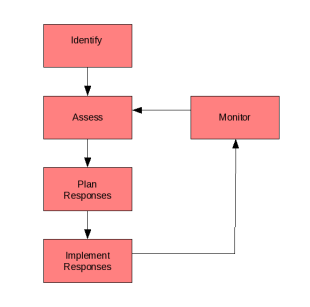
Learning the theory of risk management is straightforward but some skill is required to put this theory into practice. It is a bit like learning how to avoid and recover from a skid in a car - reading the book isn't enough. We do become better drivers with experience, but if you really want to hone your car-control skills a day at a skid pan is more effective. This one-day, unexamined course is 'skid pan' training for project managers
All our training is a mixture of lectures, exercises and other interaction but, because this course is focussed more on developing skills than transferring knowledge and building understanding, it has a higher ratio of interaction to lectures.
We set out a framework for systematic, rigorous risk management aligned with the 'Project Risk Analysis and Management Guide' published by the Association for Project Management.
We then provide participants with the opportunity to explore the practical application of this framework and to hone their skills in the context of an extended 'risk game'.